
19 March 2026
The Day Bali Falls Silent 19 March 2026
Nyepi, the Balinese Day of Silence, marks the beginning of the Saka New Year—celebrated in 2026 on March 19. Rooted in ancient Hindu traditions, Nyepi was first formally observed in Bali around the 9th century, following the introduction of the Saka calendar from India. Over time, it evolved into one of the most unique cultural observances in the world. Unlike typical New Year celebrations filled with noise and festivity, Nyepi is defined by stillness, reflection, and complete shutdown.
In the days leading up to Nyepi, a variety of offerings of different scales are prepared and presented across the island, each carrying deep symbolic meaning. In homes, families create banten—intricate offerings made from flowers, rice, fruits, and incense—as expressions of gratitude and devotion. One of the most significant offerings is caru, which involves animal sacrifice and symbolizes the transformation of raw, untamed energy into balance and harmony. This offering is presented to Bhuta Kala, the unseen forces of nature.
A unique aspect of this ritual takes place at twilight, which is considered the time when unseen forces wander and travel. During this time, the Balinese people create loud, rhythmic noise by striking anything that can produce sound, while carrying torches made from bundles of dried coconut leaves. They circle their house yards as part of a cleansing ritual and gather at crossroads for village purification, symbolically awakening the unseen forces and signaling that the offerings have been prepared to appease them.
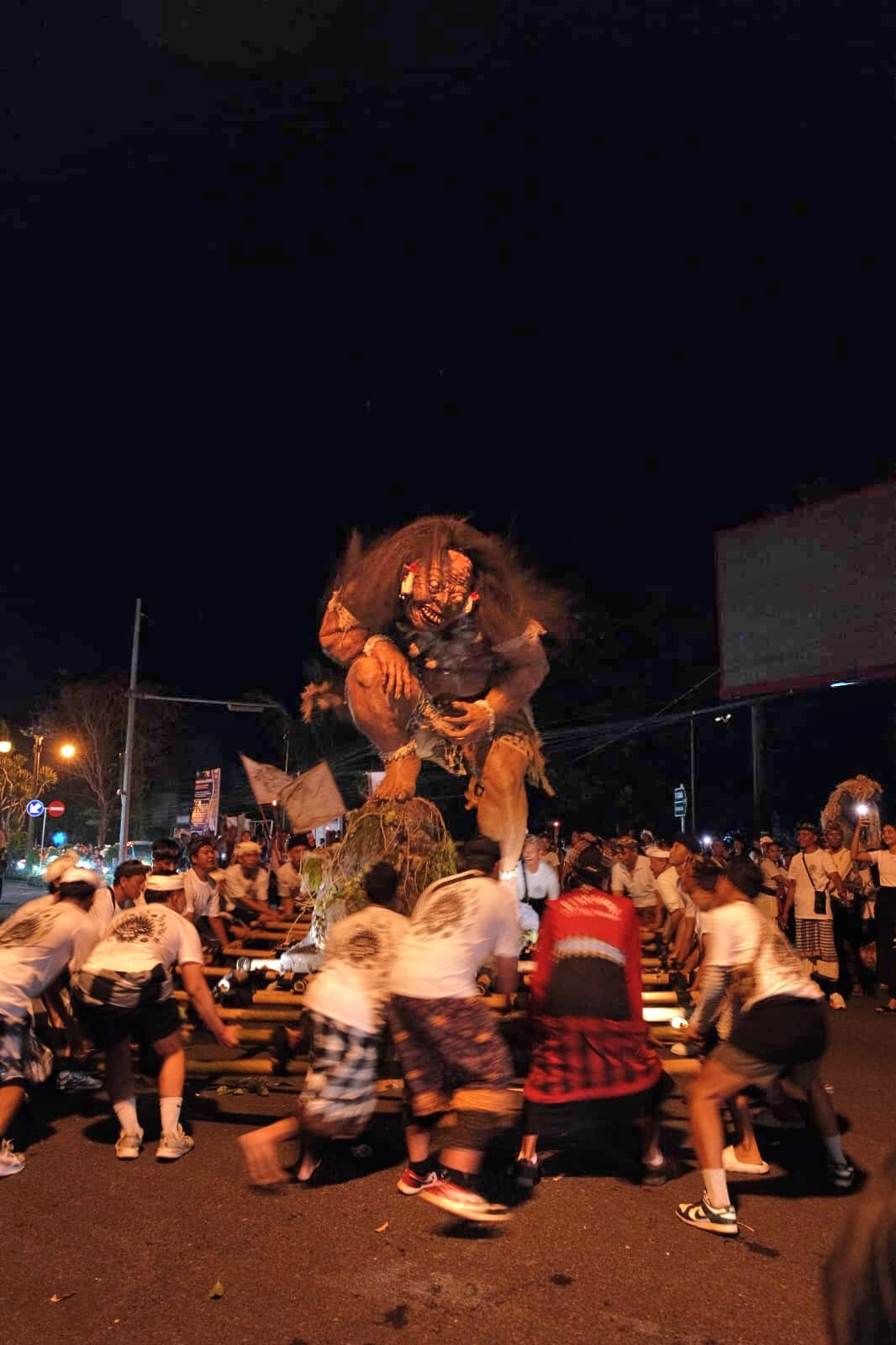
Later, the vibrant ogoh-ogoh parade takes place throughout villages across Bali, featuring large, intricately crafted effigies that represent negative forces or malevolent spirits. These creations, often built by local youth groups, are paraded through the streets accompanied by traditional music and lively energy before being ritually burned to symbolize the cleansing of negativity.
In Denpasar, the capital of Bali, the celebration is taken even further with ogoh-ogoh competitions participated in by various banjar (community groups). The winners are selected based on several criteria, including artistic creativity, structural craftsmanship, thematic depth, and the ability to convey strong philosophical or cultural messages through their design and performance.
This has evolved into an annual showcase of community creativity, with some groups investing tens of millions of rupiah in their creations—funded through personal contributions and generous donations. Some ogoh-ogoh even incorporate electrical mechanisms, allowing them to move dynamically like robots.
This traditional attraction not only captivates local communities but also draws visitors from around the world, who come to witness the spectacle firsthand. Its unique blend of cultural expression, artistic creativity, and spiritual significance has made it one of the most anticipated events in Bali’s annual calendar.
Offices and hotels also participate, placing offerings at entrances and shrines to maintain harmony between people and the environment. At the village level, especially at crossroads, larger and more elaborate offerings are arranged as part of rituals to neutralize negative forces. These offerings reflect the Balinese philosophy of Tri Hita Karana, emphasizing balance between humans, nature, and the spiritual realm.
When Nyepi Day arrives, Bali transforms into an island of complete silence and stillness. Streets that are usually vibrant and busy become entirely empty—no vehicles, no flights, no visible human activity. This is not merely symbolic; it is intentional. The silence and darkness are meant to give the illusion that the island is uninhabited, deceiving malevolent spirits into believing that Bali has been abandoned, so they pass over without causing harm. They will eventually leave the island, finding no one left to harm.
To ensure the sanctity of the day, traditional security officers known as pecalang patrol the villages, ensuring that the four main prohibitions (Catur Brata Penyepian) are observed: no fire (or light), no work, no travel, and no entertainment. Those who break these rules may face customary sanctions, reinforcing the community’s collective respect for the ritual.
What makes Nyepi even more remarkable is the collective respect shown by the entire island, regardless of religious background. People of other religions living in Bali—Muslims, Christians, Buddhists, expatriates, and others—observe and honor the Day of Silence by staying at home and refraining from outdoor activities.
Businesses close, streets remain empty, and daily routines pause in unity. This shared commitment reflects the deep-rooted value of tolerance and harmony in Balinese society, where cultural respect transcends individual beliefs and becomes a collective responsibility.
As Nyepi ends and the following day begins, Bali awakens in a way that feels profoundly different. After 24 hours of complete rest, the island seems to breathe again. The air feels noticeably fresher, the skies clearer, and the natural sounds more vivid. It is a rare moment where both nature and humanity reset together.
For the Balinese, this is more than just a physical renewal—it is a spiritual rebirth, a quiet yet powerful reminder of harmony, discipline, and the importance of balance in life. It is the best time to visit Bali after Nyepi, when the island emerges feeling renewed and reborn. Let’s drive you around the authenticity of Bali island, drop your message to wa.me/6281262866677.